The Invisible Job Market Hiding Inside Your Own Zip Code
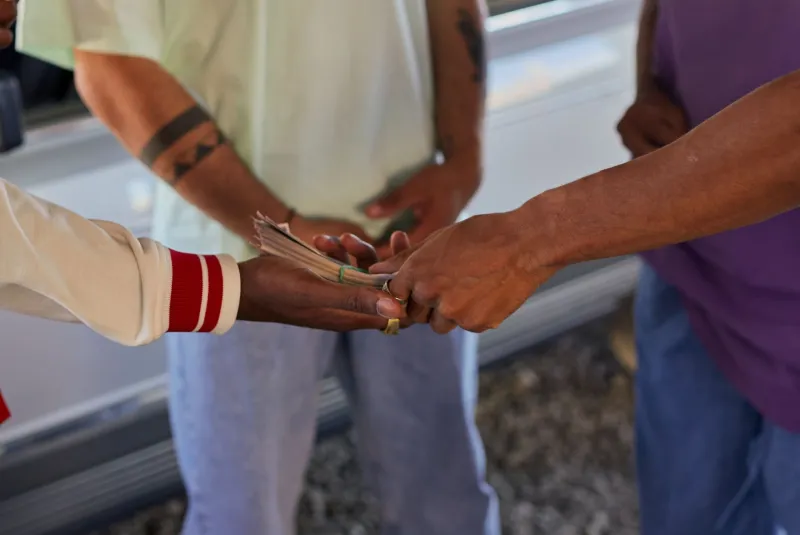
Open up Indeed or LinkedIn right now and search for work in your area. You'll get a list of corporate postings, remote roles headquartered in states you've never visited, and maybe a few local warehouse gigs. What you won't find is the retired electrician three streets over who's been quietly paying neighbors $60 a pop to help him haul equipment on weekends. You won't find the mom-run tutoring collective in your school district that's desperately looking for someone who can teach AP Chemistry. And you definitely won't find the hyperlocal grocery delivery operation that two brothers launched out of their garage last spring, now pulling in enough to cover both their rents.
That economy exists. It's just invisible to the platforms built to serve everyone — which means they end up serving no one's neighborhood particularly well.
Why Job Boards Can't See What's Right in Front of You
Traditional job platforms are engineered for scale. They're designed to match a software engineer in Austin with a company in Seattle, or help a nurse in Phoenix land a travel contract in New England. That's genuinely useful. But the logic that makes them work at scale is the exact same logic that makes them useless at the hyper-local level.
Posting a formal job listing costs time, money, and a certain threshold of organizational seriousness. A neighbor who needs someone to help manage her Etsy shop's local pickup orders isn't going to spin up an HR workflow to find that person. The guy who runs a mobile car detailing operation out of his driveway isn't posting on ZipRecruiter when he needs a second set of hands on busy Saturdays. These are informal, proximity-dependent arrangements — and they live and die by word of mouth, unless something better comes along.
Proximity-based platforms are starting to change that equation. When your economic search radius shrinks from "nationwide" to "within a mile," entirely different opportunities start surfacing.
The Neighborhood Gig Economy Looks Nothing Like DoorDash
When most people hear "gig economy," they picture Uber, Instacart, or TaskRabbit — platforms that technically connect you to local work but are still run by distant corporations optimizing for their own margins. The neighborhood-level version is a different animal entirely.
Take skill-sharing arrangements. In neighborhoods with a high concentration of tradespeople — think South Side Chicago, or the outer boroughs of New York, or working-class suburbs of Houston — informal networks have long existed where a plumber trades work with an electrician, or a carpenter does a job for a neighbor in exchange for bookkeeping help. These aren't barter deals out of some prepper fantasy. They're rational economic arrangements between people who trust each other because they literally live near each other.
Or consider tutoring. Formal tutoring companies charge families $80 to $150 an hour and keep a significant cut. But in dozens of neighborhoods, parents have quietly organized their own collectives — a WhatsApp group here, a neighborhood app there — where local college students and retired teachers offer sessions at $25 to $40 an hour, paid directly. Everyone wins except the middleman.
Then there's the micro-delivery layer that's grown up in dense residential areas. Not DoorDash — actual neighbors who've figured out that their building or their block has consistent demand for specific things. One woman in a DC suburb built a small but steady income stream just by offering to pick up orders from a local butcher shop that didn't deliver, charging a modest convenience fee to the dozen or so households on her street who were already customers.
Geographic Proximity Creates a Different Kind of Trust
Here's the thing that national platforms fundamentally can't replicate: when you hire someone who lives nearby, the accountability structure is completely different. They're not a faceless contractor in another state. They're the person you might see at the same coffee shop on Saturday morning. Their reputation in your neighborhood is a real asset they're not going to torch for a quick buck.
That proximity-based trust is economically valuable in ways that are hard to quantify but easy to feel. It's why a neighbor's recommendation for a handyman carries more weight than fifty five-star reviews on a national platform. It's why local tutoring collectives retain students better than corporate chains. People are more comfortable spending money — and spending it more freely — when they know the person on the other end of the transaction is genuinely embedded in their community.
Platforms built around location awareness are starting to tap into this. When you can surface opportunities that are literally around the corner, filtered by the actual geography of your daily life, the economic relationships that emerge are stickier and more sustainable than anything an algorithm optimizing for nationwide scale can produce.
How to Actually Find These Opportunities
So if they're not on the job boards, where do you look?
Start with the platforms that are built around proximity rather than bolted-on location filters. Apps and services that put your immediate neighborhood at the center — rather than treating it as one data point among millions — are where these micro-opportunities are most likely to surface. IAmNear is built around exactly this idea: what's happening close to you right now, including economic activity that never makes it onto a national radar.
Next, think about what your specific neighborhood actually needs. Not what neighborhoods in general need — yours, specifically. A dense urban block with a lot of young professionals has different micro-economy potential than a suburban street full of families with school-age kids, which is different again from a retirement-heavy community in Florida. The opportunities that exist in your zip code are shaped by the specific people who live there, and you already have more insight into that than any job board does.
Finally, don't underestimate the value of just being visible and local. Some of the most interesting neighborhood income streams start with nothing more than someone posting in a local group that they have a specific skill available. The retired accountant who mentioned she could help small businesses with quarterly taxes and ended up with six steady clients — all within walking distance. The college student who offered to help elderly neighbors with their phones and tablets and turned it into a reliable $400-a-month side income. These aren't flukes. They're what happens when proximity meets a platform that can actually surface the connection.
The Zip Code Is the Unit That Matters
The national job market is real and it matters. But it's not the only market, and for a lot of people, it's not even the most accessible one. The economy running inside your zip code — informal, trust-based, proximity-dependent — is alive and growing, and it's largely invisible to the tools most people use to find work.
That invisibility isn't permanent. It's a gap, and gaps have a way of getting filled. The question is whether you'll be on the right side of it when they do.