The Local Moments You Scrolled Past Were Worth Real Money
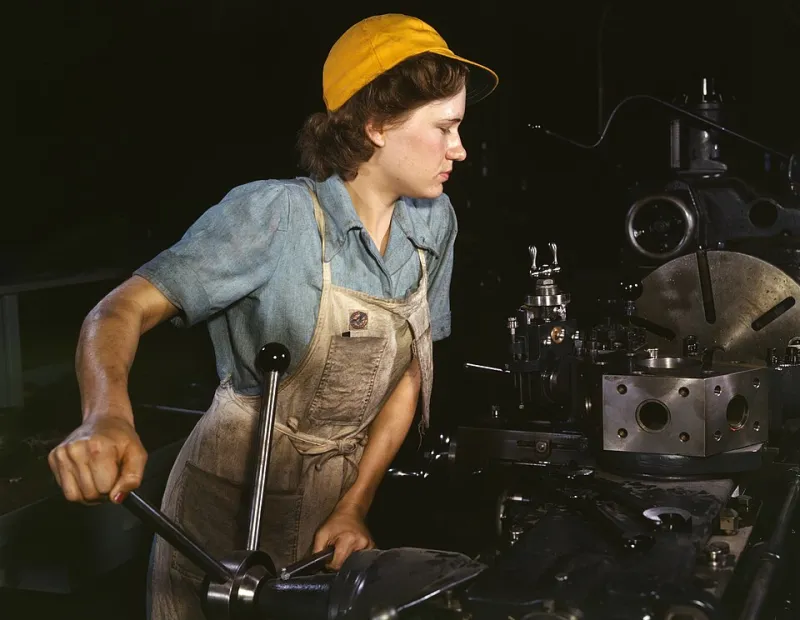
Photo: Howard R. Hollem, Public domain, via Wikimedia Commons
Let's talk about a job that never got posted online.
A small marketing agency in Denver needed a part-time copywriter last fall. The owner, a woman named Dana, mentioned it at a neighborhood business association meeting on a Tuesday night. By Thursday, she'd hired someone who lived eight blocks away — a former journalist who'd been quietly freelancing and happened to be in the room. The position was never listed on LinkedIn, Indeed, or anywhere else. It didn't need to be.
That's one story. But multiply it across every coffee shop corkboard, every community Slack channel, every "hey, do you know anyone who..." conversation happening in your city right now, and you start to see the shape of an entire economy that runs parallel to the one you're probably plugged into.
And if you're not paying attention to what's happening around you locally, you're likely missing more of it than you realize.
The Hidden Price Tag of Tuning Out
Most people think about opportunity in broad strokes — national job boards, major e-commerce platforms, big-brand sales events. But a surprising amount of financial and professional value circulates at the hyperlocal level, and it tends to go to the people who are physically and socially present.
Consider what researchers and community economists have documented for years: local businesses, particularly in dense urban neighborhoods, often operate with informal hiring pipelines built almost entirely on word-of-mouth and proximity. A 2022 survey by Alignable found that nearly 60% of small business owners said referrals from people they already knew — neighbors, local customers, community members — were their primary source of new hires.
That's not a niche phenomenon. That's the majority of small business hiring in America happening through channels that require you to actually be around.
Flash Sales, Pop-Ups, and the Economics of Being There
It's not just jobs. Local retail operates on a different rhythm than the Amazon-ified version of commerce most of us default to. Boutiques run flash sales announced via Instagram Stories that disappear in 24 hours. Restaurants do soft launches and invite the neighbors. Farmers markets have vendor-only deals for regulars who show up consistently.
Take Rachel, a teacher in Philadelphia who started making a habit of walking through her neighborhood's main commercial strip on Saturday mornings instead of ordering everything online. Within three months, she'd built relationships with two shop owners who regularly held back items for her, discovered a local butcher who sold weekend surplus at a significant discount, and got invited to a community investment co-op that ended up being a meaningful side income stream.
"I wasn't doing anything special," she said. "I was just present. I was just there."
Being there, it turns out, is a competitive advantage.
Networking Events Nobody Tweeted About
The professional networking landscape has a well-known formal tier — industry conferences, LinkedIn events, alumni mixers. But underneath that is a dense, informal layer of local professional community that rarely gets documented anywhere.
In most mid-sized American cities, any given week will include:
- Informal meetups hosted at neighborhood bars or coffee shops by local industry groups
- Community foundation events where funders and grantees mingle with general public
- Chamber of commerce mixers that are open to non-members
- "Third place" gatherings at libraries, makerspaces, and coworking spots
- Neighborhood business improvement district events
These are rooms where decisions get made, introductions happen, and careers quietly pivot. And they're almost never promoted effectively online.
Marcus, a UX designer in Atlanta, landed his current role after meeting his future boss at a neighborhood trivia night that his coworking space hosted. "She wasn't there to recruit anyone," he said. "She was just there. And so was I. We talked for like 20 minutes about a documentary we'd both seen, and she mentioned they were looking for someone. It was that casual."
Casual, yes. But not accidental. Marcus made a point of showing up to local things regularly. That's what put him in the room.
Community Initiatives That Could Improve Your Daily Life
Beyond the financial angle, there's a quality-of-life dimension to local awareness that's easy to underestimate. Community initiatives — neighborhood improvement projects, local advocacy efforts, cooperative buying groups, tool libraries, community gardens — tend to recruit and benefit people who are already paying attention.
In Seattle, a neighborhood-level food cooperative has saved participating families an average of $1,200 a year on groceries, according to their own member surveys. Membership is capped, and new spots open up through community announcements, not national advertising.
In Kansas City, a neighborhood association successfully lobbied for a new bus route that cut commute times for thousands of residents. The organizing happened through local listservs, community meetings, and word of mouth. People who weren't plugged in didn't know it was happening — and almost missed the public comment period that shaped the final outcome.
Staying local isn't just about finding deals. It's about having a voice in the place you actually live.
Why We Miss It
So why do so many of us let this stuff slip by?
Part of it is attention architecture. Our phones and social feeds are tuned to global or national content — viral posts, national news, platform-wide trends. The algorithm doesn't know or particularly care that there's a hiring event at the brewery two miles from your apartment tonight.
Part of it is habit. We've been conditioned to think of "the internet" as the primary place where opportunity lives, which makes us passive about the physical world around us. We wait for things to come to us digitally rather than going to them in person.
And part of it is simply not knowing where to look.
Practical Ways to Stay Plugged In
You don't need to overhaul your life to become more locally aware. A few targeted habits go a long way:
Read the room — literally. Bulletin boards at coffee shops, laundromats, community centers, and gyms are still active information channels. Get in the habit of actually reading them.
Follow local business accounts separately. Create a dedicated list on Instagram or Facebook for businesses and organizations in your immediate area. The algorithm buries local content in general feeds.
Use location-aware platforms. Apps and sites built around proximity — like IAmNear — surface what's actually happening near you, not what's trending nationally. That distinction matters.
Set a recurring calendar block. Even 30 minutes a week dedicated to checking local event listings, community boards, and neighborhood channels can surface opportunities you'd otherwise miss entirely.
Walk your neighborhood with intention. Sounds simple, but a weekly walk with your eyes up — not on your phone — will surface more local intelligence than most apps will.
The ROI of Being Present
Here's a way to think about it: every time you're genuinely present and aware in your local environment, you're increasing the surface area for opportunity. Not every moment will pay off. But over time, the compounding effect of showing up — to the meetup, the farmers market, the community meeting, the coffee shop — is significant.
The job that didn't get posted online. The sale that lasted one afternoon. The neighbor who knew exactly the right person. The initiative that would have changed your street if more people had shown up.
These things are happening near you right now. The only question is whether you're near enough to catch them.