Your Neighborhood Is Screaming for Skills You Already Have — Here's How to Hear It
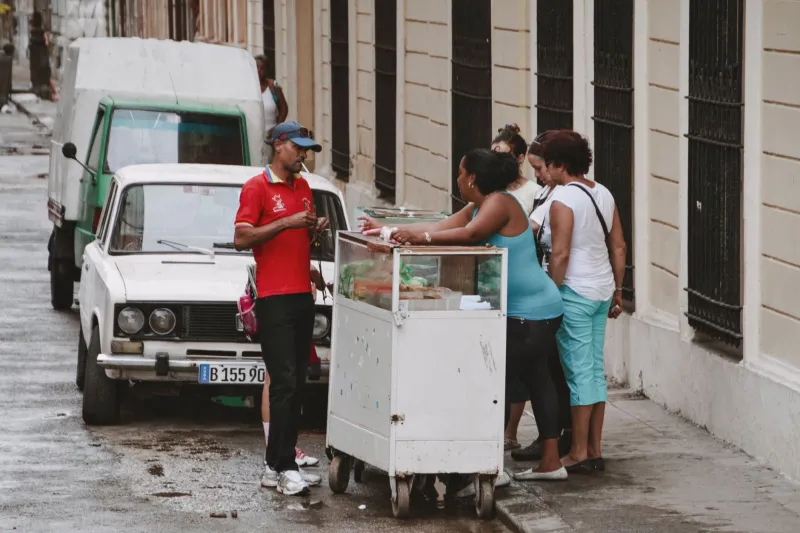
Somewhere within a half-mile of where you're sitting right now, someone is overpaying a stranger from the internet for something you could do in your sleep. They're doing it because they don't know you exist. And that's a fixable problem.
Hyperlocal skill shortages — the specific, acute talent gaps that form inside neighborhoods, microdistricts, and small commercial corridors — are one of the least-discussed economic phenomena in the country. They're also one of the fastest paths to paid work for people who know how to spot them.
Why Neighborhoods Develop Talent Gaps in the First Place
It sounds counterintuitive. We live in a gig economy. Fiverr has a million listings. Why would any neighborhood be short on skills?
Because national platforms solve a different problem. When a restaurant owner in Pilsen, Chicago needs someone to redesign their menu layout by Thursday, they don't have time to vet a designer in Austin over Slack. When a boutique owner in Silver Lake, LA needs a quick bookkeeping fix before tax season, she's not scrolling through Upwork profiles — she's asking her neighbor if they know anyone.
Proximity creates urgency. And urgency creates a pricing premium that most remote freelancers never see.
The talent gaps that form locally aren't random, either. They tend to cluster around a few patterns:
- Neighborhood demographic shifts — When a neighborhood gentrifies or diversifies rapidly, the service economy often lags behind. New residents bring different needs that local providers haven't adapted to yet.
- Small business density without support infrastructure — Corridors packed with independent shops often share a chronic shortage of affordable, accessible specialists: bookkeepers, social media managers, photographers, even basic IT support.
- Seasonal surges — Coastal towns, college neighborhoods, and tourist districts experience violent swings in demand for very specific skills that the local workforce never quite catches up to.
What This Actually Looks Like on the Ground
Consider what happens every spring in neighborhoods anchored by small landscaping and home-service businesses. The demand for basic administrative help — scheduling, invoicing, customer follow-up — spikes hard. These are one- or two-person operations that suddenly have more work than they can manage. They need someone local, someone they can hand a phone to, someone they don't have to train on the neighborhood geography.
Or think about the commercial strips that emerged post-pandemic in mid-size cities like Columbus, Richmond, or Tucson — blocks of independent coffee shops, vintage stores, and food vendors that are all trying to build a social media presence simultaneously. The demand for content creation in those corridors is real and immediate. But because each business owner thinks of it as their individual problem, nobody's posting a formal job listing. It's just a gap, sitting there, waiting.
That's the thing about hyperlocal shortages: they're mostly invisible to traditional job markets because they're filled through word of mouth — or not filled at all.
The Rate Difference Is Not Small
Here's the part that should get your attention. When a client is desperate and local, the negotiating dynamic flips completely.
On a national platform, you're competing against dozens of profiles, often in a race to the bottom on price. Locally, you're often the only person who showed up. That changes everything.
A freelance photographer who charges $300 for a product shoot on a national platform might easily get $500 from a boutique owner in their own neighborhood who needs photos by the weekend and doesn't have time to coordinate with someone remote. A bookkeeper who'd compete hard for $40/hour on a gig platform might command $65/hour from a local contractor who just needs someone they can meet for coffee to go over the numbers.
The desperation premium is real. And it's not exploitative — it's market pricing. The convenience and reliability of local, available talent has genuine value that clients will pay for.
How to Actually Identify the Gap Near You
This is where most people get stuck. The shortage is real, but it's not advertised. So how do you find it?
Walk the commercial strip. Seriously. Spend an hour walking through the business corridor closest to you and look for signals: handwritten help-wanted signs, cluttered storefronts with no clear branding, social media pages that haven't posted in months, Google listings with no photos. Each of those is a potential gap.
Use proximity platforms intentionally. Tools designed around location — Nextdoor, local Facebook groups, community apps — are full of people asking for recommendations. "Does anyone know a good photographer near [neighborhood]?" is a skill gap announcement. Track those posts for two weeks and you'll have a clear picture of what your area is short on.
Talk to the connectors. Every neighborhood has a few people who seem to know everyone — the owner of the corner coffee shop, the person who runs the neighborhood association newsletter, the real estate agent who's been working the area for a decade. Ask them what businesses around them are struggling with. They'll tell you.
Check what's not on Yelp. If a service category has almost no local listings in your area, that's often a gap, not just low demand. People don't stop needing bookkeeping or web updates or pet care — they just stop being able to find it locally and end up settling for a worse remote option.
Turning the Gap Into a Client
Once you've identified a shortage, the approach is simpler than most people expect. You don't need a portfolio website or a formal pitch deck. You need to show up.
Introduce yourself to the business owner directly. Tell them what you do. Tell them you're local. That last part matters more than you'd think — "I'm two blocks away" is a genuinely compelling selling point for a small business owner who's been burned by remote contractors who go quiet when deadlines hit.
Bring something specific. If you noticed their Instagram hasn't posted in six weeks, mention it. If their Google listing has no photos, offer to fix that. Specificity signals that you actually paid attention, and it immediately separates you from the generic outreach they ignore.
And price accordingly. Don't default to the rates you'd quote on a national platform. You're solving a local, urgent problem with the added value of proximity and availability. Charge for that.
The Advantage That Disappears When You Wait
Hyperlocal gaps don't stay open forever. Once a neighborhood's needs become visible enough, they attract attention — from other local freelancers, from agencies, from platforms specifically targeting small businesses. The window where you can walk in as the obvious, available solution is real but finite.
The good news is that right now, in most American neighborhoods, those windows are still wide open. The infrastructure for connecting local talent to local demand is still catching up to the actual need. That's the whole premise behind platforms built around real-time proximity — the gap between what's needed nearby and who's available to provide it is enormous.
You don't need to build a national brand to build a real income. You might just need to look up from your screen and pay attention to the block you're already on.